
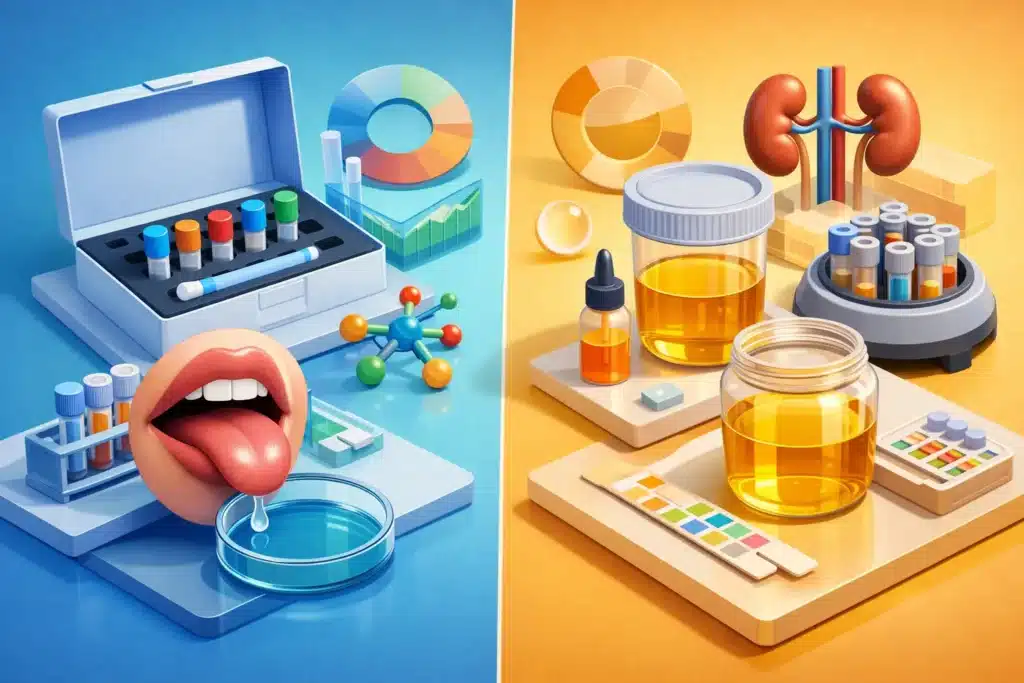
Persistent fatigue, mood changes, stubborn weight gain, disrupted sleep, low libido, and difficult periods can leave you feeling like your body is sending signals no one is fully hearing. When considering saliva hormone panels versus urine testing, the better choice is not automatically the more extensive test. It is the one that best answers the question behind your symptoms and fits a thoughtful, individualized wellness plan.
Both testing methods can offer useful information about hormone patterns. Yet they measure hormones differently, have different preparation requirements, and may be more appropriate in different situations. Understanding those differences can help you approach testing with clearer expectations and avoid chasing a lab result without considering the whole person.
What saliva hormone testing measures
Saliva hormone testing measures the fraction of certain hormones that is considered free or bioavailable at the time the sample is collected. In simple terms, it looks at the hormone portion that is not bound to proteins and may be available for the body to use.
Saliva panels commonly assess cortisol and may include sex hormones such as estradiol, progesterone, testosterone, and DHEA. One of saliva testing’s greatest strengths is the ability to collect samples at multiple points during the day. This is especially helpful for looking at cortisol, a hormone that normally follows a daily rhythm. Cortisol is generally higher after waking and gradually lowers toward bedtime.
A multi-point saliva cortisol panel can help reveal whether a person’s daily pattern appears shifted, flattened, elevated later in the day, or otherwise out of rhythm. For someone who feels wired at night, exhausted in the morning, or unable to recover from ongoing stress, that timing can be clinically meaningful in a holistic assessment.
Saliva collection is also non-invasive and completed at home. This can make it a comfortable option for people who are sensitive to needles or need a practical way to capture several samples across a normal day.
When saliva testing can be a good fit
Saliva testing may be worth considering when the main concern involves stress patterns, sleep disruption, energy crashes, or symptoms that seem tied to the daily cortisol rhythm. It can also be used in some wellness settings to explore sex-hormone patterns, particularly when a practitioner wants to evaluate free hormone levels alongside a detailed symptom history.
Collection details matter. Food, brushing teeth, bleeding gums, exercise, alcohol, supplements, and the exact collection time can affect results. Following the laboratory instructions carefully is not a minor detail – it is part of obtaining a useful sample.
What urine hormone testing measures
Urine hormone testing evaluates hormones and their metabolites, which are compounds produced as the body processes and breaks down hormones. Depending on the panel, urine testing can provide a broader view of hormone metabolism, including pathways related to estrogen, progesterone, testosterone, DHEA, cortisol, and melatonin.
Many comprehensive urine panels use a dried urine collection method. Rather than collecting a large container of urine for 24 hours, you collect small samples on filter paper at specified times. This approach can offer a practical way to examine hormone output and metabolites over the course of a day.
The metabolite information is what often makes urine testing appealing. Two people may have similar estrogen levels, for example, while processing estrogen through different metabolic pathways. A urine panel may offer clues that support a more informed conversation about nutrition, liver support, gut health, stress, sleep, body composition, and exposure to environmental burdens.
That does not mean a metabolism pattern is a diagnosis or a prediction of disease. It is one piece of information that must be interpreted in context. Symptoms, menstrual history, medications, supplement use, sleep, digestion, nutrition, and toxic exposures all matter.
When urine testing can be a good fit
Urine testing may be a strong choice for someone seeking a more detailed review of sex hormone metabolism or a wider hormone picture. It can be especially useful when concerns are complex, such as perimenopausal changes, irregular cycles, persistent PMS, low libido, sleep changes, or symptoms that have not improved despite basic lifestyle changes.
It may also be considered when a practitioner wants to assess cortisol and melatonin patterns alongside sex-hormone metabolites. Because these panels can generate substantial detail, they are most helpful when results will be reviewed by a qualified practitioner who can distinguish meaningful patterns from isolated numbers.
Saliva hormone panels versus urine testing: key differences
The central difference is not that one test is “good” and the other is “bad.” Saliva generally emphasizes free hormone levels at specific collection times, while urine often provides a broader look at hormone metabolites and pathways of hormone breakdown.
For daily stress patterns, saliva can be particularly useful because several precisely timed samples can show the shape of the cortisol curve. For a deeper assessment of estrogen metabolism, androgen metabolites, and broader hormonal pathways, urine testing may provide more detail.
Timing is another consideration. If symptoms change throughout the day, a timed saliva collection may match the question well. If the goal is to understand how hormones are being processed over time, urine metabolites may offer more relevant insight.
Cost and complexity also deserve an honest conversation. More comprehensive testing is not always more helpful. A detailed panel can be valuable when it will change the care plan, but it may not be the first step for every person. In some cases, foundational work with nutrition, sleep, stress support, movement, digestion, and environmental exposure reduction is appropriate before ordering an advanced panel.
Why symptoms should lead the testing decision
Lab testing should support your healing process, not replace it. A hormone result cannot fully explain why you feel depleted, inflamed, anxious, or unable to sleep. Hormone patterns are influenced by many factors, including chronic stress, nutrient status, blood sugar swings, digestive health, inflammation, medication use, perimenopause, thyroid concerns, and toxin exposure.
A practitioner-guided assessment begins with your story. Are you waking between 2 and 4 a.m.? Have your cycles become shorter, heavier, or less predictable? Did symptoms begin after a major stressor, illness, pregnancy, mold exposure, or a significant change in weight? Are you using hormonal birth control, hormone therapy, steroids, or supplements that could affect interpretation?
These details help determine whether saliva hormone testing, urine testing, conventional blood work, or a combination of approaches makes sense. Sometimes the most useful next step is not another hormone panel at all. It may be evaluating thyroid markers, nutrient deficiencies, blood sugar regulation, gut health, or environmental toxic burden.
Getting a more useful result
Before collecting either type of test, share all medications, hormone products, and supplements with your practitioner. Do not stop prescribed medication on your own. Some products need to be paused before collection, while others should be documented so the lab results can be interpreted accurately.
Try to choose a testing window that reflects your usual routine unless your practitioner gives different instructions. An unusually stressful travel day, a sleepless night, acute illness, or an intense workout can alter hormone-related markers. For menstruating women, cycle timing is also essential, particularly when evaluating progesterone and estrogen patterns.
At Houston Holistic Health Clinic, testing is approached as a tool for root-cause investigation, not a stand-alone answer. Results are most useful when they lead to a realistic, personalized plan that may include nutrition guidance, targeted natural support, sleep and stress strategies, and lifestyle changes that your body can sustain.
A thoughtful path forward
If you are deciding between saliva and urine hormone testing, start with the symptoms that are affecting your life most and the question you want answered. Saliva may offer a clearer view of daily cortisol rhythm, while urine may offer greater detail about hormone metabolism and broader patterns. The right choice is the one that supports meaningful next steps, honors your full health story, and helps you move toward steadier energy, better sleep, and a body that feels more like your own.
