
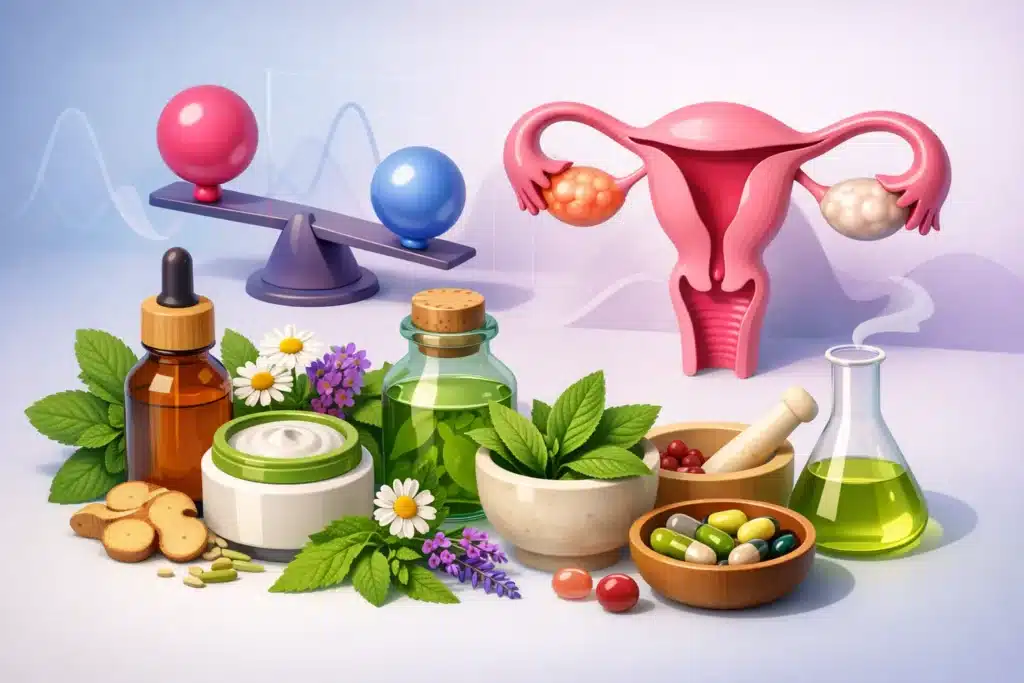
A heavier period, breast tenderness, stubborn weight changes, irritability, and migraines can leave you feeling like your body is working against you. Many people begin searching for herbal medicine for estrogen dominance after being told their basic labs are “normal” while they still feel far from well. A natural approach can be helpful, but it works best when it is built around your individual symptoms, exposures, stress load, digestion, and stage of life.
Estrogen is not the enemy. It supports bone strength, brain function, cardiovascular health, skin, and reproductive health. The concern is usually not having estrogen at all, but having estrogen effects that are high relative to progesterone, or having difficulty processing and clearing estrogen efficiently.
What Does Estrogen Dominance Really Mean?
“Estrogen dominance” is a commonly used holistic term, not a single formal medical diagnosis. It may describe a pattern in which estrogen activity is relatively high compared with progesterone, even if an estrogen result falls within a laboratory reference range. This pattern can occur during perimenopause, when progesterone production becomes less predictable, but it can affect menstruating adults at other times as well.
Possible symptoms include heavier or more painful periods, shorter cycles, breast swelling or tenderness, PMS, mood shifts, headaches around the menstrual cycle, sleep disruption, fibroids, endometriosis symptoms, and difficulty losing weight. These symptoms can also have other causes, including thyroid dysfunction, anemia, uterine conditions, medication effects, pregnancy-related concerns, or changes in diet and stress. That is why symptoms deserve thoughtful investigation rather than a one-size-fits-all hormone protocol.
A root-cause assessment looks beyond the hormone itself. It asks whether ovulation is occurring consistently, whether chronic stress is influencing progesterone production, whether the digestive system is eliminating hormones effectively, and whether environmental exposures are adding to the body’s workload.
How Herbal Medicine for Estrogen Dominance May Help
Herbs do not “flush” estrogen from the body overnight, and they should not be used to force hormone levels in one direction. When appropriately selected, they may support the systems involved in hormone balance: the liver, digestive tract, stress response, inflammation pathways, and menstrual cycle signaling.
The right herb depends on the person. Someone with significant PMS, breast tenderness, and irregular ovulation may need a different approach than someone in perimenopause with heavy bleeding and disrupted sleep. Taking a popular supplement because it worked for a friend can miss the underlying pattern and occasionally make symptoms worse.
Herbs that support liver and bile pathways
The liver transforms hormones so they can be prepared for elimination. Herbs such as milk thistle, dandelion root, burdock root, and artichoke leaf are often used in naturopathic care to support healthy liver and bile function. They are not hormone blockers. Instead, they may support the body’s normal processing pathways, particularly when paired with adequate protein, fiber, hydration, and regular bowel movements.
Bitter herbs are not right for everyone. People with gallbladder disease, bile duct obstruction, active ulcers, or certain digestive conditions need individualized guidance before using them. Even natural remedies can be poorly matched to a person’s health history.
Herbs that may support cycle balance
Chaste tree berry, often called vitex, is one of the best-known herbs for cyclic PMS patterns and concerns related to low progesterone relative to estrogen. It works through signaling pathways involving the brain and pituitary rather than acting like progesterone itself. It may be useful for some people with regular but symptomatic cycles, but it is not a universal answer for every form of hormone imbalance.
Vitex may not be appropriate during pregnancy, breastfeeding, fertility treatment, or when taking medications that affect dopamine pathways. It also deserves caution for people with hormone-sensitive conditions. A practitioner can help determine whether it fits your cycle pattern before adding it to your routine.
Herbs for stress, sleep, and the nervous system
Chronic stress does not directly create every estrogen-related symptom, but it can change ovulation, worsen inflammation, disrupt sleep, and make PMS feel much more intense. Adaptogenic and calming herbs such as ashwagandha, holy basil, passionflower, lemon balm, and chamomile may be considered when stress and poor sleep are central pieces of the picture.
These are not interchangeable. Ashwagandha, for example, may not be ideal for everyone with thyroid concerns or autoimmune conditions. Calming herbs can also interact with sedatives and other medications. The goal is not simply to take more supplements. It is to choose the few interventions that match what your body needs.
The Gut Connection Is Often Overlooked
After the liver processes hormones, the digestive tract plays a major role in moving them out of the body. Constipation can increase the opportunity for hormone metabolites to be reabsorbed rather than eliminated. Low fiber intake, an imbalanced gut microbiome, inadequate hydration, and poor bile flow can all influence this process.
For many people, the most meaningful first step is not an elaborate herbal regimen. It is having a daily bowel movement, eating enough plant fiber, including protein at meals, reducing alcohol, and creating a steadier sleep schedule. Ground flaxseed, cruciferous vegetables, berries, beans, leafy greens, and water can provide foundational support that herbs alone cannot replace.
If bloating, constipation, loose stools, reflux, or food reactions are persistent, gastrointestinal health deserves attention. An herb that looks helpful on paper may be difficult to tolerate if the gut is already inflamed or highly sensitive.
Why Testing and Timing Matter
Hormones naturally change across a menstrual cycle, which means timing matters when evaluating results. A useful assessment begins with your story: cycle length, bleeding patterns, sleep, stress, digestion, medications, supplement use, environmental exposures, and personal and family history.
Depending on your needs, a practitioner may recommend targeted lab work or non-invasive hormone testing to look for patterns that warrant deeper support. Testing should complement symptoms and clinical judgment, not replace them. Conventional evaluation may also be needed to rule out concerns such as anemia, thyroid disease, fibroids, endometriosis, or abnormal uterine bleeding.
At Houston Holistic Health Clinic, personalized care may also explore nutritional deficiencies, digestive function, toxic burden, and lifestyle factors that can influence how you feel throughout the month. This wider view helps avoid treating a single lab number while overlooking the systems that shape hormone balance.
Safety Comes First With Hormone-Supportive Herbs
Herbal medicine is powerful precisely because plants contain active compounds. That is why quality, dose, timing, and medication interactions matter. Avoid self-treating persistent heavy bleeding, new pelvic pain, bleeding between periods, severe headaches, fainting, or sudden cycle changes. Seek prompt medical evaluation for those symptoms.
Extra caution is needed if you are pregnant, breastfeeding, trying to conceive, using hormonal birth control or hormone therapy, taking blood thinners, managing liver or gallbladder disease, or have a personal history of breast, uterine, or ovarian cancer. A qualified practitioner can coordinate a natural plan with your medical care rather than asking you to choose one approach over the other.
A More Grounded Path Forward
The most effective natural plan is rarely a single capsule. It may include carefully chosen herbs, food-based fiber, support for regular elimination, stress reduction, movement, sleep repair, and attention to chemical exposures in the home and personal-care routine. Just as importantly, it should be adjusted as your symptoms and cycle change.
If you have spent months being told that your symptoms are normal, you deserve a closer look at what your body may be asking for. With individualized assessment and a safe, steady plan, natural hormone support can become less about chasing symptoms and more about helping you feel at home in your body again.
